
Tile Roof Maintenance in Orlando, FL
Tile Roof Maintenance in Orlando, FL | Protect Your Roof Before It Fails
Most tile roof problems we fix in Orlando were preventable. A $400 annual maintenance visit catches the cracked tile before the underlayment gets wet, the clogged valley before water backs up under the ridge, the loose flashing before it becomes a ceiling stain. We’ve seen $800 maintenance jobs that saved homeowners $8,000 in repairs — and we’ve seen the opposite when maintenance gets skipped for five years.
We provide comprehensive tile roof maintenance across Orlando, Winter Park, Baldwin Park, and all of Central Florida. Here’s exactly what it involves, what it costs, and why it matters more in Florida than anywhere else.
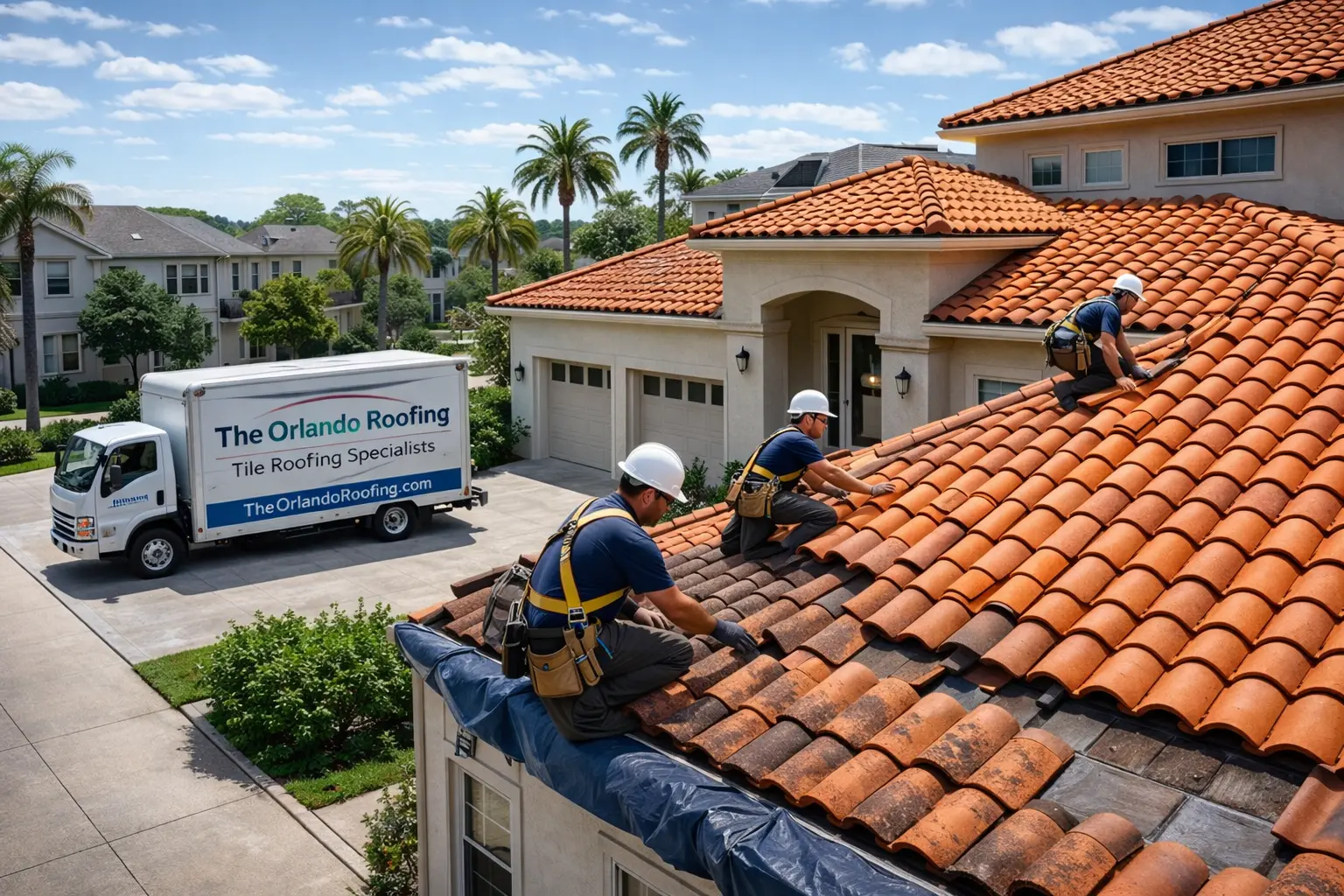
Why Orlando Tile Roofs Need Regular Maintenance
Florida’s Climate Is Uniquely Hard on Tile Roofs
It’s not just heat. It’s the combination — intense UV from 233+ days of sunshine annually, 50+ inches of rain concentrated in a 6-month wet season, hurricane-force winds from June through November, and humidity that never really goes away.
That combination accelerates every failure mode a tile roof has. Sealant around penetrations degrades faster here than in northern climates. Moss and algae establish in shaded areas because moisture lingers. Debris accumulates in valleys during storm season and holds water against the underlayment. Flashing expands and contracts through extreme temperature swings and eventually loses its seal.
None of these failures announce themselves loudly. They develop quietly over one or two seasons and show up as a leak, a stain, or a repair bill.
The Underlayment Problem Specific to Orlando
Many Central Florida homes were built during the 1980s–90s construction boom with felt paper underlayment rated for 20–25 years. Those roofs are now 30–40 years old. Regular maintenance catches the early signs of underlayment compromise — water staining on decking boards visible from the attic, softness between rafters, moisture odors — before it becomes a full replacement conversation.
If your tile roof was installed before 2000, annual maintenance isn’t optional. It’s how you get the most out of whatever underlayment life remains.
Pre-Hurricane Season Preparation Is Non-Negotiable
Orlando sits in a direct path for Atlantic systems. We schedule the majority of our maintenance visits in April and May specifically because of this. A pre-season inspection identifies loose ridge tiles, compromised valley flashing, and unsecured edge tiles — the exact points that fail first under wind loading.
The cost of finding a loose ridge tile in April is the cost of the maintenance visit. The cost of finding it in September, after it’s lifted and water has entered the underlayment during a tropical storm, is a different conversation entirely.
What Our Maintenance Program Covers at the Orlando Roofing
Complete Roof Walkthrough
We walk every square foot of your roof the right way — stepping on overlaps, not tile centers. We cover every slope, every valley, the full ridge line, all hip sections, and every penetration point.
We check each tile individually for cracks, chips, lifting, and misalignment. A tile that looks intact from 20 feet away can have a hairline crack along the underside that only shows up on close inspection. We look for it because we know where tile roofs fail first.
Flashing Inspection and Re-Sealing
Every flashing point gets checked: chimney, vent pipes, skylight curbs, satellite mount bases, drip edge, valley metal, and any custom penetrations. Sealant gets re-applied where degradation is visible but hasn’t failed yet. This is the most important preventive step on an older Orlando roof — most leaks we trace back to flashing failure that was visible and re-sealable a year before it let water in.
Valley Cleaning and Debris Removal
Valleys are where water concentrates on its way off your roof. They’re also where debris accumulates — leaves, seed pods, organic material from overhanging trees. That debris holds moisture against the valley flashing and accelerates deterioration.
We clear valleys completely during every maintenance visit. It’s not a glamorous task but it’s one of the highest-ROI things we do on a maintenance job.
Ridge and Hip Tile Security Check
Ridge tiles are the most wind-vulnerable point on any tile roof. We check every ridge tile for secure attachment, proper mortar or sealant condition, and any signs of lifting. Hip tiles get the same treatment.
If we find loose tiles during maintenance, we re-secure them on the spot as part of the visit. This single step prevents the most common post-hurricane tile repair we see — a section of ridge tiles that lifted because they were already loose before the storm arrived.
Attic Inspection
We check the attic for water staining on decking, any daylight penetration, moisture in insulation, and early mold signs. The attic tells you things the exterior can’t. Water that enters a tile roof doesn’t always drip straight through — it can travel along a rafter for several feet before showing any interior sign. The attic is where you catch it before it reaches the ceiling below.
Minor Tile Repairs Included
Standard maintenance includes replacement of up to 5 broken or cracked tiles, re-sealing of all compromised penetrations, minor flashing adjustments, and valley and gutter clearing. These aren’t billed separately — they’re part of the visit.
Anything beyond minor repairs gets documented with photos and presented as a separate estimate with your approval required before any additional work proceeds.
Detailed Written Report with Photos
Every maintenance visit produces a written report documenting current condition, anything we found and addressed, anything we recommend monitoring, and any repairs we recommend scheduling. You have a permanent record of your roof’s condition over time — which matters both for your own planning and for insurance claims after storms.
Our Annual Maintenance Program
What’s Included
A single annual visit covers everything above: complete walkthrough, flashing inspection and re-sealing, valley and gutter clearing, ridge and hip security check, attic inspection, minor tile replacement (up to 5 tiles), and a written report with photos.
Annual program cost: $400–$600
For homeowners who want twice-yearly visits — once pre-hurricane season and once post-season — the bi-annual program runs $600–$900 and is what we recommend for roofs over 20 years old or homes with significant tree coverage.
One-Time Inspections
If you’re not ready for an ongoing program, we offer one-time inspections at $200–$400 depending on roof size and complexity.
Pre-purchase inspections — for buyers evaluating a tile-roofed home — run $350–$450 and include a more detailed assessment of remaining lifespan and repair cost estimates. This is money well spent before committing to a home with a 30-year-old tile roof. We’ve saved buyers significant negotiation leverage by identifying underlayment issues the seller wasn’t disclosing.
Post-storm assessments cost $250–$350 and provide full insurance-ready documentation of any damage.
When to Schedule
April–May is the ideal window for annual maintenance in Orlando. It gets you inspected and any issues repaired before the June 1 hurricane season start. Contractor availability is better than post-storm fall periods and pricing is more predictable.
If you missed spring, October–November post-season is the second best option. You’ll catch any storm-season damage before it sits through the winter and document it while your memory of specific storm events is still fresh for insurance purposes.
What Happens If You Skip Maintenance
We don’t say this to scare anyone — we say it because we see the outcomes regularly.
A homeowner in Dr. Phillips skipped maintenance for four years on a 28-year-old tile roof. What would have been caught in year two — loose valley flashing and a handful of cracked tiles near the chimney — became a $6,400 repair by year four. The flashing had been leaking intermittently for two seasons before the ceiling stain appeared. The decking in that section needed partial replacement.
The four years of skipped maintenance cost $1,600–$2,400 in avoided tile inspection fees. The repair cost $6,400. That math is not unusual — it’s typical.
Small issues on tile roofs don’t stay small in Florida’s climate. The wet season turns a minor crack into a wet underlayment section. The hurricane season turns a loose ridge tile into an insurance claim. Annual maintenance interrupts that progression before it compounds.
DIY Maintenance vs. Professional Service
What Homeowners Can Safely Do
Visual inspection from ground level — check for obviously broken tiles, tiles in the yard or gutters after storms, unusual discoloration or moss patches, and any visible gaps in the ridge line. These ground-level checks are worth doing after every significant storm and take about 10 minutes.
Keep your gutters clean. Clogged gutters cause water to back up along the eave, which stresses the drip edge and can work under the first course of tiles. This is one maintenance task that’s genuinely DIY-appropriate.
Trim tree branches that overhang the roof. Falling branches cause obvious damage, but ongoing contact between branches and tiles also abrades the tile surface and holds moisture. Keep branches at least 6 feet from the roof.
What Homeowners Should Not Do
Walk on the roof. This is the big one. Tile roofs are not designed to be walked on casually — they require specific technique, soft-soled footwear, and knowledge of which tiles will bear weight and which won’t. We’ve been called to repair tile damage caused by homeowners attempting their own inspections. The repair cost was more than a professional maintenance visit would have been.
Pressure wash tiles. High-pressure washing strips the surface coating from concrete tile and erodes the surface of clay tile. It also forces water up under tile overlaps into the underlayment. If you want tile cleaning, it needs to be done with low-pressure soft washing at the right chemical concentration. We can do this as an add-on during maintenance visits.
Attempt flashing repairs without experience. Flashing done incorrectly is worse than flashing left alone. Improper sealant application over degraded flashing just delays the failure by one season while hiding the evidence. Leave flashing work to someone who does it every day.
Maintenance for Specific Tile Types
Concrete Tile Maintenance
Concrete tile is durable but porous. Algae and moss establish on concrete tile more readily than on clay, particularly on north-facing slopes and areas shaded by trees. We include algae and moss treatment in maintenance visits when present.
Surface color fading is normal on concrete tile after 15–20 years and doesn’t indicate a structural problem — but it can indicate the surface coating has worn through, which increases moisture absorption. We note this and factor it into replacement timeline estimates.
Clay Tile Maintenance
Clay tile requires more careful handling during inspection because it’s more brittle than concrete at points of impact. We walk clay tile roofs with extra care and check each tile individually for micro-fractures that develop along the underside — invisible from above but visible on close inspection.
Glazed clay tile is easier to maintain than unglazed terracotta — the glazed surface resists algae and sheds debris more readily. Unglazed terracotta needs more attention on shaded sections.
Historic Tile Maintenance (Winter Park)
Historic clay tile roofs from the 1920s–40s need maintenance handled by someone who understands their fragility and historical value. We don’t approach a 90-year-old clay tile roof the same way we approach a 2005 concrete tile roof.
If you’re in Winter Park’s historic district, we know the preservation guidelines, understand the tile types common to that era, and handle every inspection with the care those roofs require. Some of these original tile installations are irreplaceable — the manufacturers don’t exist anymore and authentic replacements are difficult to source. Protecting what’s there is always the priority.
Frequently Asked Questions
How often should I have my tile roof maintained in Orlando?
Once a year minimum. Twice yearly — pre-hurricane season and post-season — for roofs over 20 years old or homes with heavy tree coverage. The cost difference between annual and bi-annual programs is $200–$300 per year. On an aging roof, that’s a reasonable insurance policy.
What’s included in the maintenance visit price?
Complete roof walkthrough, flashing inspection and re-sealing, valley and gutter clearing, ridge and hip security check, attic moisture inspection, replacement of up to 5 broken tiles, and a written report with photos. Minor repairs are included — anything beyond that is presented separately for your approval.
Do I need maintenance if my roof looks fine?
Yes — and this is exactly the misconception that leads to expensive repairs. Most tile roof problems that become serious aren’t visible from the ground until they’ve been developing for a year or two. The inspection catches what you can’t see. A roof that looks fine externally can have loose ridge tiles, degrading valley flashing, and early underlayment moisture that only shows in the attic.
Can you do maintenance while I’m not home?
Yes. We don’t need interior access unless we identify something that warrants an attic check — which we’ll communicate before the visit. We document everything with photos and send the written report same day.
Is maintenance required for my tile warranty?
Some manufacturer warranties require documented annual inspections to remain valid. Check your specific warranty terms. We provide written reports with every maintenance visit specifically because they serve as warranty documentation.
How long does a maintenance visit take?
45–90 minutes depending on roof size, complexity, and what we find. Complex Mediterranean-style roofs with multiple valleys and hips take longer than simple gable designs. We don’t rush it — a maintenance visit done quickly is a maintenance visit done poorly.
Do you offer multi-year maintenance contracts?
Yes. We offer 3-year maintenance agreements at a 10% discount from standard annual pricing. This locks in your rate, guarantees scheduling priority in April for pre-season visits, and gives you a single document for your home records showing consistent professional maintenance — which matters for insurance purposes and resale.
Schedule Your Tile Roof Maintenance
April and May book out quickly for pre-hurricane season maintenance. If you’re reading this in late winter or early spring, now is the time to schedule.
Call (689) 336-3381 — Monday through Saturday, 8am to 6pm.
Or use the contact form and we’ll get back to you within 2 hours during business hours.
Annual program starts at $400. One-time inspections from $200. No obligation to continue after the first visit — though most of our maintenance clients have been with us since we first inspected their roof.
Licensed and insured in Florida. Serving Orlando, Winter Park, Baldwin Park, Windermere, Dr. Phillips, Lake Nona, and all of Central Florida.