A tile roof inspection isn’t just a formality. It’s the difference between catching a $400 problem and inheriting a $6,000 one. We inspect tile roofs across Orlando, Winter Park, Baldwin Park, and all of Central Florida — and we do it the right way, which means walking every inch of your roof without breaking anything, checking your attic, and handing you a written report with photos you can actually use.
Whether you’re buying a home, preparing for hurricane season, filing an insurance claim, or just haven’t had your roof looked at in a few years — here’s what a proper inspection covers and what it costs.

This is the inspection that saves buyers the most money. A tile roof on a home you’re purchasing might look beautiful from the street — and have failing underlayment, cracked tiles under ridge caps, and compromised valley flashing that the seller either doesn’t know about or isn’t disclosing.
We’ve done pre-purchase inspections where the findings gave buyers $8,000–$15,000 in negotiating leverage. We’ve also done them where the roof was genuinely solid and the buyer could proceed with confidence. Both outcomes are valuable.
Don’t rely on a general home inspection for tile roof assessment. General home inspectors aren’t trained in tile-specific failure points, most won’t walk the roof properly, and their reports are broad by design. You want a specialist who does tile roofing every day.
This one isn’t optional in Central Florida. After a hurricane or tropical storm passes through Orlando, the damage that’s going to cost you money isn’t always visible from the ground. Ridge tiles that lifted and re-seated look intact. Displaced tiles that shifted slightly still look like tiles. Underlayment sections exposed for 48 hours during the storm are already wet.
We inspect post-storm roofs with insurance documentation as a primary output — detailed photos of every damaged section, written assessment of storm causation, and a scope of work that holds up with adjusters. File fast after storms. Florida insurance claims have time limits and adjusters are overwhelmed in the weeks after a major system.
April and May are when we do the majority of our pre-season inspections in Orlando. The logic is straightforward — find the loose ridge tiles, the compromised flashing, the cracked tiles near the chimney before a Category 2 finds them first.
A pre-season inspection costs $200–$400. The average post-hurricane tile roof repair in Orlando runs $2,500–$6,000. The math isn’t complicated.
Fifteen years in Florida’s climate is meaningful. UV exposure, thermal cycling, and wet season stress accumulate in ways that aren’t visible on the surface. At 15 years we start checking underlayment condition carefully. At 25 years we’re looking for signs of systemic underlayment failure. At 35 years we’re giving you an honest assessment of whether a tile repair or tile replacement is the better path forward.
If your tile roof has never been professionally inspected, the time is now regardless of how it looks from the driveway.
Ceiling stains, musty smells in the top floor, water appearing during heavy rain — these symptoms tell you something is wrong but rarely tell you exactly where. Tile roof leaks notoriously travel. Water enters at a flashing failure near the chimney and shows up as a stain three feet away on the ceiling below.
We find the actual source, not just the symptom. That distinction matters because patching the wrong spot doesn’t fix anything.
What We Inspect — Every Single Time
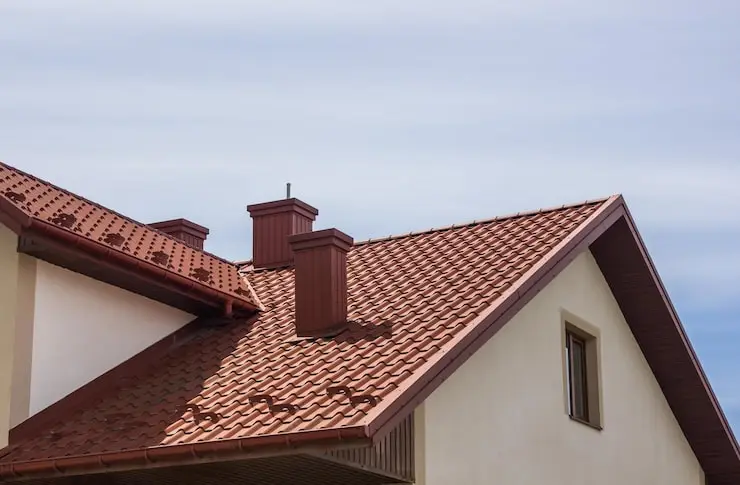
Every tile on every slope gets checked. We look for cracks, chips, breaks, lifting, misalignment, and surface deterioration. We pay particular attention to ridge and hip tiles — the most wind-vulnerable points — and to tiles adjacent to valleys and penetrations where movement and water exposure are highest.
On concrete tile roofs, we also check for surface coating wear and algae or moss establishment, which signals moisture retention and accelerates deterioration beneath the tile.
Chimney flashing, vent pipe boots, skylight curbs, satellite mount bases, drip edge condition, valley metal, and step flashing where applicable. Every one of these is a potential water entry point and every one gets hands-on inspection, not a visual scan from a distance.
Sealant condition gets assessed specifically. Sealant around penetrations in Orlando’s heat has a shorter service life than the roofing materials it protects. Finding degraded but not yet failed sealant is a maintenance win — re-sealing it costs almost nothing. Finding failed sealant after it’s let water in for a season is a different job entirely.
We physically check the security of every ridge and hip tile. Not just visually — we test attachment. A ridge tile can look perfectly seated and be barely held in place by aging mortar or a fastener that’s backed out over time. Wind loading reveals this. We reveal it first.
Any loose ridge or hip tile gets re-secured during a maintenance visit or flagged with urgency in an inspection report depending on the service you’ve booked.
Valleys channel water off your roof. When they’re blocked by leaf debris and organic material — which happens fast on tree-lined streets in Winter Park and College Park — water backs up and finds its way under adjacent tiles. We clear valleys and check the underlying metal for corrosion, improper laps, and any points where the water flow path is compromised.
This is the step most roofing inspectors skip. We go in the attic on every inspection because the attic tells you things the exterior can’t. Water staining on decking boards indicates where water has entered — even if the interior ceiling below hasn’t shown symptoms yet. Discolored insulation, mold on decking, and daylight penetration are all findings that change the urgency of what we recommend.
A tile roof that looks fine from outside can have active moisture damage in the attic that’s been building for 12–18 months. We find it before it reaches the living space.
Gutters directly affect roof performance. Clogged gutters cause water to back up under the eave course, stress the drip edge, and in extreme cases push water up under the first tile course. We check gutter condition, slope, and attachment as part of every inspection.
Complete roof walkthrough, flashing check, ridge and valley assessment, attic moisture inspection, and a written summary with photos. The right choice for routine annual tile maintenance or a general condition check.
Everything in the standard inspection plus a detailed written report with prioritized findings, cost estimates for any recommended work, and a remaining lifespan assessment. Right for homeowners who want a full picture of where their roof stands and what to budget for.
Our most thorough inspection. Detailed written report with photos, specific repair cost estimates, remaining lifespan projection, and an honest replacement timeline if warranted. We’ve found major issues on roofs that passed general home inspection. This inspection is designed to give buyers the information they need to negotiate, proceed, or walk away.
One thing worth knowing: we work for you on a pre-purchase inspection, not the seller. Our job is to tell you the truth about the roof, not to facilitate the transaction.
Focused on documenting storm damage for insurance purposes. Complete photo documentation of every damaged section, written assessment establishing storm causation, and a detailed scope of work that holds up with adjusters and supports supplement requests for secondary damage.
Timing matters here. Get this done quickly after a storm — adjusters are overwhelmed after major systems and early documentation gives you better control of the claim process.
Some insurers require a formal roof inspection report before writing or renewing a policy on an older tile roof. We provide the documentation in the format insurers require, including age assessment, condition rating, and estimated remaining useful life. We note it honestly — if a roof has 5 years of useful life remaining under Florida’s SB-2A standards, we say so, and if it has 20, we say that too.
Overall roof condition rating, tile type identification, estimated age, and our honest assessment of where the roof stands — whether that’s “solid for another 15 years with basic maintenance” or “underlayment showing signs of systemic failure, replacement should be budgeted within 3 years.”
We don’t soften findings to avoid awkward conversations. You hired us to tell you the truth.
Every issue we find gets documented with a photo, a description of what it is and why it matters, and a priority rating:
Immediate — address within 30 days, active risk of water intrusion or structural concern. Short-term — address within 6 months, will worsen if left through hurricane season. Monitor — not urgent now, but watch at next inspection.
This structure gives you a clear action plan rather than a list of problems with no sense of what’s actually urgent.
For anything rated immediate or short-term, we include a repair cost estimate. Not a range so wide it’s meaningless — a realistic estimate based on your specific tile type, your roof’s complexity, and current Central Florida material and labor costs.
Specific to your roof. If your valleys are filling with debris from an overhanging oak, we say trim the tree and schedule a valley clean before storm season. If your flashing sealant is at end of life but not yet failed, we schedule it for re-sealing at the next visit. Practical, specific, actionable.
Some inspectors do visual assessments from the ground with binoculars. Others walk the perimeter and check accessible sections. We walk the entire roof — every slope, every valley, the full ridge line. There’s no substitute for close inspection of individual tiles when you’re looking for hairline cracks, lifting at fastener points, and early flashing separation.
Proper tile roof walking requires specific technique — stepping on overlaps, not tile centers, knowing which profiles bear weight and which don’t, using soft-soled footwear, and moving deliberately rather than quickly. A general roofer who does tile work occasionally doesn’t develop this instinctively.
We’ve been called to repair tile damage caused by other contractors during their own inspections. That’s not a hypothetical. It happens regularly and it’s exactly the kind of thing a homeowner shouldn’t have to deal with.
Not what will generate the most work. If your roof needs a $500 repair, that’s what we recommend. If it’s in genuinely good condition, we tell you that and give you a maintenance plan. If it needs replacement in the next 3 years, we tell you that too so you can plan for it rather than get surprised.
Our inspection fee is the same regardless of what we find. That matters — it means there’s no financial incentive to overstate problems.
| Inspection Type | Cost | Best For |
| Standard Annual | $200–$300 | Routine maintenance |
| Comprehensive | $300–$400 | Full condition assessment |
| Pre-Purchase | $350–$450 | Buying a home |
| Post-Storm | $250–$350 | Insurance documentation |
| Insurance Requirement | $300–$400 | Policy renewal |
Free inspections apply when you’re scheduling a repair or replacement estimate — we don’t charge separately for the inspection that leads to a work proposal.
Response time: standard inspections scheduled within 3–5 business days. Post-storm inspections prioritized — we understand timing matters for claims.
How long does a tile roof inspection take?
45–90 minutes for most Orlando homes. Complex Mediterranean-style roofs with multiple valleys, hips, and penetrations take closer to 90 minutes. We don’t rush it — a quick inspection misses things.
Do I need to be home during the inspection?
Not for the roof work itself. We prefer you’re available for the end-of-inspection walkthrough so we can show you findings in person and answer questions directly. If that’s not possible, we send a detailed written report with photos same day.
Will you go in my attic?
Yes, on every inspection where attic access is available. The attic check is not optional — it’s where we find moisture damage that hasn’t reached the interior yet. If your attic access is blocked or very limited, we note that in the report.
Can a tile roof inspection be done in rain?
No — wet tile is a safety issue and rain obscures surface conditions we need to see clearly. We reschedule around weather and build flexibility into our scheduling specifically for Florida’s afternoon thunderstorm season.
What if you find something serious during the inspection?
We stop, document it thoroughly with photos, and walk you through what we found before any repair discussion. You get the full picture first. Then if you want an estimate for the work, we provide one. No pressure to decide anything on the spot.
How does a tile roof inspection differ from a general home inspection?
A general home inspector assesses dozens of systems across the whole house — they’re generalists by design. We inspect tile roofs exclusively. We know where tile roofs fail, how to walk them without causing damage, what early underlayment failure looks like from the attic, and how to document findings for insurance purposes. The reports aren’t comparable in depth or specificity.
Do you provide inspection reports for insurance purposes?
Yes. Our post-storm and insurance requirement inspection reports are formatted specifically for insurance use — detailed photo documentation, written damage descriptions, storm causation assessment, and scope of work. We’ve helped Orlando homeowners recover full claim amounts from initial offers that significantly underpaid.
We inspect tile roofs across Orlando, Winter Park, Baldwin Park, College Park, Lake Nona, Windermere, Kissimmee, Sanford, and all of Central Florida. If your roof hasn’t been inspected in the last 12 months — or ever — that’s the place to start.
Call (689) 336-3381 — Monday through Saturday, 8am to 6pm. Post-storm inspections prioritized.
Or use the contact form and we’ll respond within 2 hours during business hours.
Standard inspections from $200. Pre-purchase inspections from $350. Free when you’re scheduling repair or replacement work.
Licensed and insured in Florida. We tell you what we find — nothing more, nothing less.