How Much Does a Roof Replacement Cost in Orlando? (2026 Price Guide)
If you want a real number before you call anyone, here it is: roof replacement cost in Orlando runs between $9,000 and $42,000 in 2026, depending on the material you choose and the size of your roof. For the most common scenario, a 2,000-square-foot home with architectural asphalt shingles, most Orlando homeowners pay $12,000 to $18,000. Tile and standing seam metal run considerably more.
The Orlando Roofing is a free matching service that connects homeowners with independent, licensed, insured contractors who replace shingle, tile, metal, and flat roofs across Orange County every week. The numbers below reflect typical Central Florida pricing for 2026, not a national average.
This guide breaks down every variable that moves your number, material by material, size by size, and neighborhood by neighborhood, so you can read any contractor’s estimate with real context.
One term to know up front: roofers price by the “square.” One roofing square equals 100 square feet of roof surface. A typical Orlando home is 18 to 30 squares.
2026 Roof Replacement Cost in Orlando — Quick Overview
| Material | Cost per sq ft (installed) | Typical total (2,000 sq ft home) |
|---|---|---|
| Architectural asphalt shingles | $5 – $9 | $10,000 – $18,000 |
| 3-tab asphalt shingles | $4 – $7 | $8,000 – $14,000 |
| Impact-resistant (Class 4) shingles | $6 – $10 | $12,000 – $20,000 |
| Metal — exposed fastener | $8 – $12 | $16,000 – $24,000 |
| Metal — standing seam | $10 – $23 | $20,000 – $46,000 |
| Concrete tile | $9 – $19 | $18,000 – $38,000 |
| Clay tile | $12 – $21 | $24,000 – $42,000 |
| Flat / TPO | $4 – $10 | $7,000 – $15,000 |
All figures include tear-off of the existing roof, new synthetic underlayment, materials, labor, and standard permit fees. They assume a standard gable or hip roof at moderate pitch. Your actual cost depends on roof complexity, pitch, accessibility, and what’s found under the old material. Want a quick personalized number first? Try our roof replacement cost calculator, then read on to understand the details.
Roof Replacement Cost by Material
Material is the single biggest driver of your price. Here’s what each option really costs in Orlando, and what matters about it in Florida’s climate.
Asphalt Shingles — $8,000 to $20,000
Asphalt is the most popular shingle roofing choice in Orlando. Architectural shingles (also called dimensional or laminate) run $5–$9 per square foot installed and dominate the market because they balance cost, wind resistance, and availability.
What matters about asphalt in Florida: the intense sun shortens its real service life. A shingle rated for 25–30 years up north realistically lasts 15–20 years in Central Florida, because UV breaks down the surface and daily thermal cycling loosens the tabs. Budget for that shorter life.
Wind resistance depends on the grade:
3-tab shingles ($4–$7 per sq ft) are cheaper but aren’t a good fit for a Florida home with real wind exposure. Quality matters as much as the shingle: proper installation means six nails per shingle per manufacturer specs, and trusted brands like GAF, Owens Corning, and CertainTeed back their systems with strong warranties.
Metal Roofing — $16,000 to $46,000
Metal roofing comes in two very different products. Exposed-fastener metal (5V or corrugated) runs $8–$12 per sq ft $16,000–$24,000 for a 2,000 sq ft home. It uses visible screws with rubber washers that wear out in 15–20 years, so it costs less but needs more maintenance.
Standing seam metal runs $10–$23 per sq ft ($20,000–$46,000). Hidden fasteners, a 40–70 year service life, and strong hurricane performance make it the premium choice. It can earn substantial Florida insurance discounts and reflects solar heat, cutting summer cooling costs by 10–25% a real number in Orlando’s July utility bills. Over 30+ years, one standing seam roof can cost less than two or three asphalt replacements.
Concrete Tile — $18,000 to $38,000
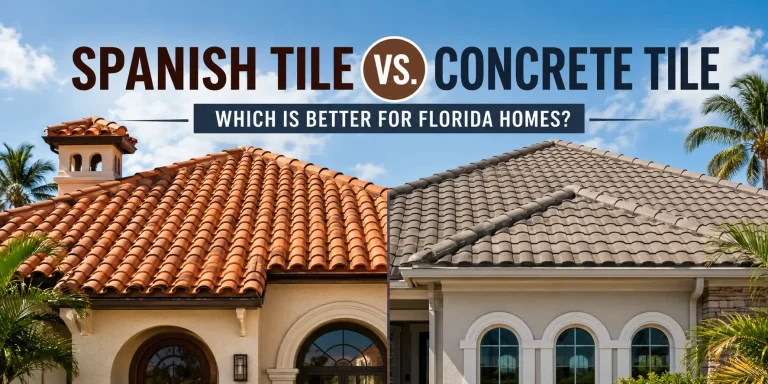
The most common tile in Orlando roughly 70% of Central Florida tile roofs are concrete, installed heavily from the 1990s through the 2010s in communities like Lake Nona, Dr. Phillips, College Park, and Baldwin Park. Tile runs $9–$19 per sq ft installed, handles 125–130 mph winds, and lasts 40–50 years.
One issue specific to Orlando’s older homes: many 1980s–90s concrete tile roofs were built with felt underlayment rated for only 20–30 years. The tiles may still look fine while the underlayment beneath them failed a decade ago. When you replace an aging tile roof, synthetic underlayment is the correct replacement, not felt. Also watch for discontinued tile profiles (older Eagle, US Tile, and Monier lines); a full replacement avoids the matching headaches a partial repair creates.
Clay Tile — $24,000 to $42,000
The premium option. Clay runs $12–$21 per sq ft and lasts 50–100+ years a once-in-a-lifetime roof for most owners. Color runs through the whole tile (it never fades), it resists heat better than concrete, and it exceeds 150 mph wind resistance when properly fastened. You’ll see it on Winter Park’s historic homes and high-end Windermere estates, where historic-district rules can add permitting steps.
Flat & TPO Roofing — $7,000 to $15,000
Many modern Orlando homes, additions, and commercial buildings have flat or low-slope sections. TPO, modified bitumen, and EPDM membranes typically run $7,000–$15,000 and depend heavily on correct drainage and seam welding.
What Affects Your Roof Replacement Cost in Orlando?
Two homes on the same street can get quotes that differ by $4,000 or more. Here’s why.
Roof Size
Roofing is priced by the square, and roof surface area is larger than your home’s footprint because of slope and overhangs. Approximate asphalt shingle costs by home size in Central Florida:
| Home size | Approx. roof squares | Architectural shingle cost |
|---|---|---|
| 1,500 sq ft | 15–18 sq | $9,000 – $14,000 |
| 2,000 sq ft | 20–24 sq | $12,000 – $18,000 |
| 2,500 sq ft | 25–30 sq | $14,000 – $22,000 |
| 3,000 sq ft | 30–36 sq | $17,000 – $26,000 |
These are asphalt figures multiply by roughly 2x for concrete tile and 2.5x for clay tile.
Roof Pitch
Pitch is your roof’s slope (rise over run). Steeper roofs have more surface area and need more safety setup and time:
Many Mediterranean-style homes in College Park, Winter Park, and Windermere run 6/12 to 8/12, so plan for the higher end.
Tear-Off of the Existing Roof
Removing and disposing of the old roof adds $1,000–$3,000. This isn’t optional in Florida you can’t inspect the decking without it, and overlaying a second layer adds weight and violates the Florida Building Code in most cases. Tile tear-off costs more than shingle because the material is heavier to handle.
Decking Condition
Once the old roof is off, a contractor inspects the decking (the plywood or OSB beneath). In Orlando’s humidity, water-damaged or rotted decking is common on 20+ year old roofs. Replacement runs about $75–$150 per sheet (roughly $2–$5 per sq ft for affected areas); a small section is $300–$800, while extensive rot can add $1,500–$5,000. Ask every contractor up front, “If you find bad decking, how do you price it?” The honest answer is a per-sheet rate, not “included” on an old roof.
Permits & Inspections
Orange County and City of Orlando residential roof permits typically run $150–$400 (often around $190–$275), calculated from project value. The permit covers a dry-in inspection (checking the secondary water barrier and deck nailing before the final material goes on) and a final inspection.
For 2026, Orange County also requires an added inspection whenever damaged decking is replaced. Every reputable contractor pulls the permit; if a contractor suggests skipping it, walk away. Budget roughly 4 to 8 weeks from contract to final inspection for a permitted tile project.
Roof Complexity & Penetrations
Every chimney, skylight, vent pipe, dormer, and valley needs custom flashing and slower, careful work. A simple gable roof prices standard; a complex roof with multiple valleys, dormers, and penetrations can add 15–25% in labor. Older homes in Winter Park and College Park land at the higher end.
Labor, Timing & Access
Labor is the part most people underestimate it’s typically 40–60% of your total, about $2–$4 per sq ft for asphalt and $3–$7 per sq ft for tile and metal. Orlando crew rates average roughly $45–$75 per hour for free matching service that connects homeowners with licensed roofing contractors, insured professionals. Two more factors:
Roof Replacement Cost by Orlando Neighborhood
Costs shift across the metro because the housing stock does:
Insurance Coverage for Roof Replacement in Orlando
Storm damage from named hurricanes, tropical systems, falling trees, and severe thunderstorms is typically covered by Florida homeowners insurance. Normal wear, age, and deferred maintenance are not. A few things every Orlando homeowner should understand:
The Hurricane Deductible Reality
Florida carriers offer hurricane deductibles of $500, 2%, 5%, or 10% of your home’s Coverage A limit, applied only to named-storm damage. In real numbers, a $350,000 home at 5% is a $17,500 hurricane deductible often more than the entire non-storm portion of a roof. Know your deductible before a storm, because it decides whether filing a claim even makes sense.
ACV vs. RCV
Actual Cash Value (ACV) pays the depreciated value of your roof a 15-year-old roof may net only a fraction of replacement cost, and you cover the gap. Replacement Cost Value (RCV) pays the full replacement minus your deductible. Check which one your policy carries before you assume what you’ll receive.
Florida Statute 627.7011 — Roof-Age Protection
Carriers can’t cancel your policy solely for roof age if a professional inspection shows 5+ years of useful life remaining. This protects tile-roof owners from shingle-age logic. If you get a non-renewal citing roof age on a sound tile roof, get an independent inspection first.
Florida’s Matching Statute
Insurers can’t patch a damaged roof with tiles that don’t match. When a damaged profile is discontinued, the Matching Statute can require full replacement of the affected sections which is why post-storm claims on older tile roofs often become full replacements. Document any matching difficulty during your claim.
Contractors in our network typically inspect, document the damage with photos and a written report, and can guide you through the claim so it’s recorded properly.
Repair or Replace? When Replacement Makes Sense
Not every roof needs replacing. A roof repair is usually right when damage is isolated, the roof is under 30 years old, the underlayment is intact, and the repair cost is well under 40% of replacement. Most Orlando repairs run $350–$1,800.
Lean toward a full roof replacement when the roof is 30+ years old (especially with original felt underlayment), you have leaks in multiple spots, repairs approach 40–50% of replacement cost, or you’re selling within 12–18 months and the roof creates insurance or financing problems for buyers. The only way to know for sure is a free roof inspection.