Tile Roof Repair vs. Replacement: An Orlando Homeowner’s Guide (2026)
If you are weighing tile roof repair vs. replacement, the honest answer is that it depends on one thing more than any other: the condition of the underlayment beneath your tiles, not the tiles themselves.
In Orlando, concrete tile lasts 40 to 50 years, and clay tile can last 50 to 100 years, but the underlayment that actually keeps water out only lasts about 15 to 30 years. That single fact decides most repair-or-replace questions.
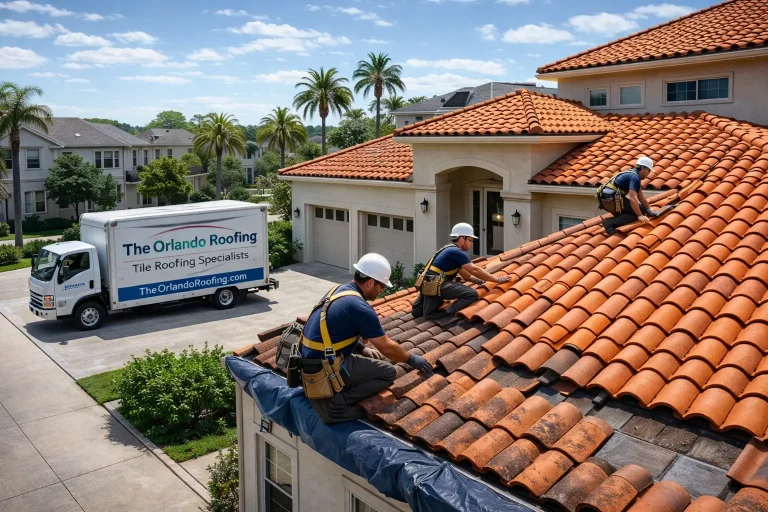
The Orlando Roofing is a free matching service that connects homeowners with independent, licensed, insured contractors who repair and replace tile roofs across Orange County every week. This guide covers the real factors and Orlando numbers to make a smart choice, walking through when a repair is the right call, when replacement makes more sense, and the middle option many homeowners do not know about.
The Quick Answer
Repair your tile roof when:
Replace your tile roof when:
If you are between these two lists, that is normal. The next sections show how to tell which side you are really on.
The Most Important Thing to Understand: It Is Usually the Underlayment
Most people think a tile roof leak means a bad tile. Most of the time, it does not. The tiles are the tough outer shell that takes the sun, wind, and rain. The underlayment is the waterproof layer underneath that actually stops water from reaching your home.
In Orlando heat and humidity, underlayment wears out long before the tile does. Older felt underlayment was rated for about 20 to 25 years, and many Central Florida tile roofs from the 1980s and 1990s are now well past that. The tiles still look fine from the street, but the layer doing the real work has already failed. That is why swapping a few cracked tiles often does not stop a leak. The water is getting in through tired underlayment, not through one tile.
So before you decide, the real question is not how the tiles look. It is how much life the underlayment has left. The only way to know that is a roof inspection that checks the attic and lifts a few tiles to see the layer below.
When Tile Roof Repair Makes Sense
A tile roof repair is the right move when the problem is small and the rest of the roof is healthy. Repair fits when:
- Only a handful of tiles are cracked or missing, often from a storm or a fallen oak branch.
- There is one small leak that has not spread.
- The underlayment under the rest of the roof is still doing its job.
- The roof deck is solid, with no soft spots or sagging.
- The roof still has years of life left.
- You plan to sell soon and need the roof looking right.
The upside of repair is clear. It is faster, often done in a day, and far cheaper. Most tile repairs in Orlando run a few hundred to a couple thousand dollars. The thing to watch is matching. Older tile profiles and colors can be hard to find, so a good roofer sources or salvages matching tile so the fix blends in. You can read more in our guide to the signs you need tile roof repair.
When Tile Roof Replacement Makes Sense
A full roof replacement is the smarter choice when the problem is the whole system, not one spot. Replace when:
- You have leaks in several places that do not trace to a single tile.
- Past repairs keep failing, because each one only treats a symptom.
- Tiles are spalling, which means they are flaking, chipping, or breaking apart across wide areas.
- The tiles are losing their shape or sliding out of line over large sections.
- The roof deck is sagging, a sign water has reached the wood and the structure.
- The roof is past 40 years old, especially on its original underlayment.
When the underlayment has failed everywhere and the deck is wet, no number of patches will fix it for long. Each repair adds new holes and weak points and buys months instead of years. At that point, replacement is the cheaper path over time.
The Middle Option Most Homeowners Miss: Lift and Relay
Here is the option that makes tile different from shingles. When your tiles are still strong but the underlayment is worn out, you do not always have to buy a whole new roof of tile. A roofer can do a lift and relay.
In a lift and relay, the crew carefully removes your existing tiles, throws away the old underlayment, replaces any damaged decking, installs fresh synthetic underlayment, and then resets your original tiles. Done right, it can add another 25 to 40 years of life to your roof while keeping the tile you already own.
This matters in Orlando because so many local tile roofs have great tile sitting on dead underlayment. A lift and relay costs more than a small repair but usually less than a full replacement with brand new tile, since you are reusing the tile. It is often the best value when the tiles are sound and the underlayment is the real problem.
The 40 Percent Rule and Orlando Cost Comparison
A simple way to decide is the 40 percent rule. If the repair cost gets close to 40 to 50 percent of a full replacement, and the roof is older, replacement is usually the better long term choice.
Here are typical Orlando tile cost ranges to compare:
| Option | What it covers | Typical Orlando cost |
|---|---|---|
| Minor repair | A few cracked tiles, one small leak, no underlayment work | $400 to $1,800 |
| Moderate repair | Storm damage, valley work, flashing, 20 to 40 tiles | $2,000 to $5,000 |
| Lift and relay (section) | New underlayment on part of the roof, original tiles reset | $4,500 to $12,000 |
| Full lift and relay | New underlayment across the roof, original tiles reset | $12,000 to $25,000 |
| Full replacement, new concrete tile | Complete new tile roof | $18,000 to $38,000 |
| Full replacement, new clay tile | Complete new tile roof | $24,000 to $44,000 |
For example, a full concrete tile replacement around $28,000 puts 40 percent at about $11,200. If you are facing more than that in repairs on a 30 year old roof with underlayment problems, replacement or a full lift and relay is worth a serious look. For a deeper breakdown, see our tile roof replacement cost guide, or get a quick number from our roof cost calculator.
Florida Rules That Affect Your Decision
A few state rules can shape whether you repair or replace. These can change, so confirm the current version with your contractor.
The 25 Percent Rule
Under the Florida Building Code, if more than 25 percent of a roof or a roof section is damaged within a 12 month period, that section may need to be brought up to current code, which often means replacement. There is an important update, though. If your roof was built or replaced after March 1, 2009, and already meets the 2007 or newer code, you may only need to repair the damaged area even if it is over 25 percent. This protects many newer Orlando homes from a forced full replacement.
The Matching Statute
Florida’s matching law says an insurer must consider whether replacement tiles match the rest of your roof in quality, color, and size. When your tile profile is discontinued and a match is not possible, the insurer may have to replace adjoining areas rather than leave you with a patchwork roof. On older Orlando tile with 1990s profiles, this often turns a repair claim into a larger replacement.
The Roof Age Law
Florida law also recognizes that a sound older roof with at least 5 years of useful life left can be repaired, not forced into replacement. If an inspection documents real life remaining, that report is your proof if a carrier pushes you toward a new roof, you do not need.
Do Not Forget Insurance and Resale
The lower quote is not always the smarter choice. Two things often get skipped:
Insurance carriers look closely at roof age, especially as it passes the 15 year mark, and many require an inspection before renewing an older policy. A repair fixes today’s leak, but it does not reset the roof’s age or refresh its documented condition. A full replacement, done to current code, resets that clock and gives you a fresh, documented roof, including details like deck attachment and underlayment that insurers ask about.
Resale matters too. A new roof recovers roughly 60 to 70 percent of its cost at sale and removes a major buyer and insurance objection. In today’s Orlando market, where buyers watch roof age and insurance cost closely, a sound or new roof can be the difference between a quick sale and a slow one.
How Orlando’s Climate Pushes the Timeline
Orlando is inland, so you get less salt damage than coastal homes, but the rest of the climate is hard on a tile system. Strong UV runs well above the national average, summer roof surfaces can hit 150 to 170 degrees, and humidity sits high most of the year. That heat and moisture break down underlayment faster than in cooler states.
Add hurricane season and the constant oak debris in many Orlando neighborhoods, and the underlayment under a good tile roof reaches the end of its life sooner than homeowners expect. This is why a tile roof that looks perfect can still be due for a lift and relay.
How to Decide: Get an Inspection First
You cannot make this call from the ground or from a photo. The deciding factor, the underlayment, is hidden under the tile. A proper inspection checks the attic for moisture and decking stains, lifts a few tiles to see the underlayment, and looks at flashing, valleys, and the deck.
From there, you get a straight answer: repair, lift and relay, or full replacement, with honest numbers for each. Inspections through our network are typically free, with no pressure to buy.