Hurricane Milton Damaged Your Roof? What Orlando Homeowners Should Do Now
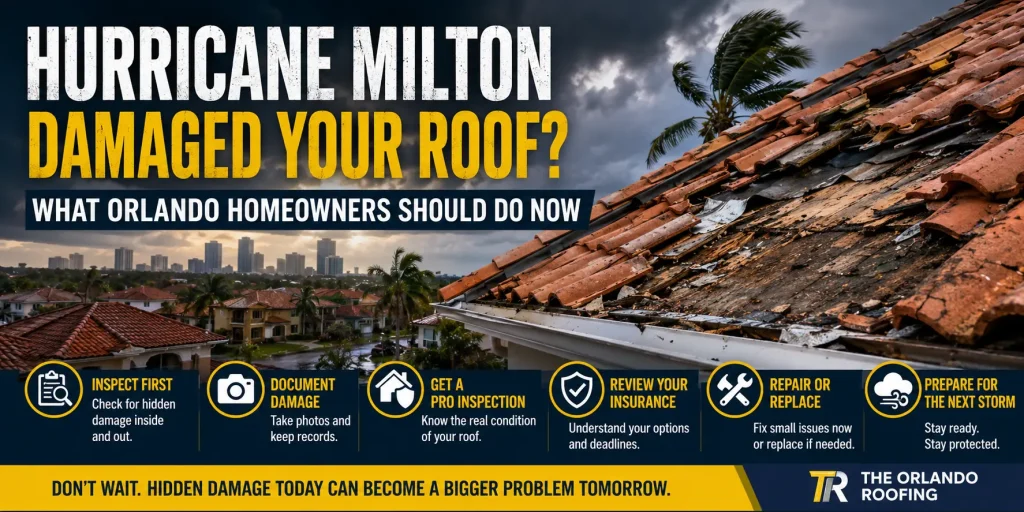
Hurricane Milton damaged thousands of roofs across Central Florida when it swept through in October 2024, and many of those roofs still have problems that were never fully fixed. Some homeowners patched a leak and moved on. Others got a tarp and never replaced it. And a lot of damage was simply hidden, working slowly under the tiles or shingles until it shows up now as a stain on the ceiling. If your roof went through Milton, this guide explains what to look for in 2026 and what to do about it.
The Orlando Roofing is a free matching service that connects homeowners with independent, licensed, insured contractors who have inspected and repaired many storm-damaged roofs across Orange County since Milton. Below is a clear, honest look at where things stand and how to protect your home now.
What Hurricane Milton Did to Central Florida
Hurricane Milton made landfall near Siesta Key on October 9, 2024, as a Category 3 storm with sustained winds around 120 mph. It reached Category 5 over the Gulf before wind shear weakened it near the coast. Even inland, Central Florida took a hard hit. The Orlando area saw strong winds, an elevated tornado threat, and heavy rain that pushed the St. Johns River and local waterways well above normal for days.
Roofs across the region paid the price. Wind lifted and cracked tiles, peeled shingles, and tore flashing loose, while wind-driven rain found every weak point. In the days after the storm, the federal Operation Blue Roof program installed free temporary tarps for many Central Florida homeowners, and FEMA assistance opened for Orange County residents. Those tarps were always meant to be temporary, which is part of why so many roofs still need real repairs today.
Why Milton Roof Damage Is Still Showing Up in 2026
Storm damage does not always announce itself. A roof can look fine from the street while water quietly works its way in. Here is why Milton’s damage is still surfacing more than a year later:
This is why a roof that seemed okay right after the storm can start leaking now. The water was getting in the whole time.
Signs Your Roof Has Hidden Hurricane Milton Damage
Walk around your home and check inside for these warning signs:
If you see any of these, it is worth a professional look. Our guide on the signs you need tile roof repair goes into more detail, and a roof inspection confirms what is really going on.
What to Do Now If Milton Damaged Your Roof
The most important step is to stop guessing and get a real assessment. From the ground, you cannot see the underlayment or the decking, which is where storm damage usually hides. A professional inspection checks the attic, lifts a few tiles, and looks at the flashing and valleys, then gives you a written report with photos.
From there you will know whether you need a targeted roof repair or a full roof replacement. Do not wait for a bigger leak to force the decision. Every month that water keeps reaching the underlayment, the repair gets larger and more expensive. If your roof is leaking right now, emergency roofing help is available to secure it quickly.
Insurance Claims After Hurricane Milton: Where Things Stand in 2026
This part calls for honesty. Under current Florida law, a homeowner generally must report a new claim within one year of the date of loss, and a supplemental or reopened claim within 18 months. Because Milton hit on October 9, 2024, those standard windows have generally passed by 2026.
What that means for you depends on your situation:
This isn’t legal advice. A contractor can inspect your roof, document the damage clearly with photos and a written report, and give you honest repair and replacement numbers, which help no matter how you handle the insurance side. Even when a claim window has closed, fixing the damage still protects your home and its value.
Repair or Replace After Milton Damage?
Whether you repair or replace comes down to how far the damage spread and the condition of the underlayment. Isolated cracked tiles or one small leak usually means a repair. Leaks in several spots, failed underlayment across the roof, or a sagging deck usually means replacement.
A roof that has been leaking since 2024 often falls into the second group, simply because the water has had so long to work. Our repair vs. replacement guide walks through how to tell, and an inspection gives you the clear answer for your roof.
Getting Ready for the Next Storm
Milton was a reminder that Central Florida is in the path every season. Once your roof is repaired or replaced to current code, a few steps each spring keep it strong: clear your gutters and valleys, trim branches over the roof, and book a pre-season inspection. Our hurricane preparation guide covers the full checklist.