Hurricane Preparation for Orlando Tile Roofs (2026 Guide)
Hurricane preparation for tile roofs is not something to leave until a storm is on the map. Orlando sits right in the path of Atlantic systems, and history proves it. Hurricane Charley reached Central Florida in 2004 with gusts topping 106 mph at Orlando International Airport. Hurricane Ian flooded Orange County in 2022. Hurricane Milton caused tens of millions in damage across Central Florida in October 2024. By the time a named storm is forecast, roofers are booked, supplies run short, and safe roof work is no longer possible.
Tile handles hurricanes better than most materials. Properly installed concrete tile resists winds up to about 130 mph, and clay tile up to 150 to 180 mph. The key words are “properly installed” and “well maintained.” A tile roof with loose ridge tiles, worn flashing, and 30 year old underlayment will not perform like an inspected, secured roof.
It also does not take a major hurricane to cause damage. Strong tropical storms and Category 1 and 2 systems cause most tile roof failures, because they find weak points that were already there.
The 2026 hurricane season runs June 1 through November 30, with peak activity between mid August and late October. What you do in April and May decides how your roof performs in September. The Orlando Roofing is a free matching service that connects homeowners with independent, licensed, insured contractors. This guide covers exactly what to do, when to do it, and what to expect if a storm hits.
Start With a Pre-Season Inspection in April and May
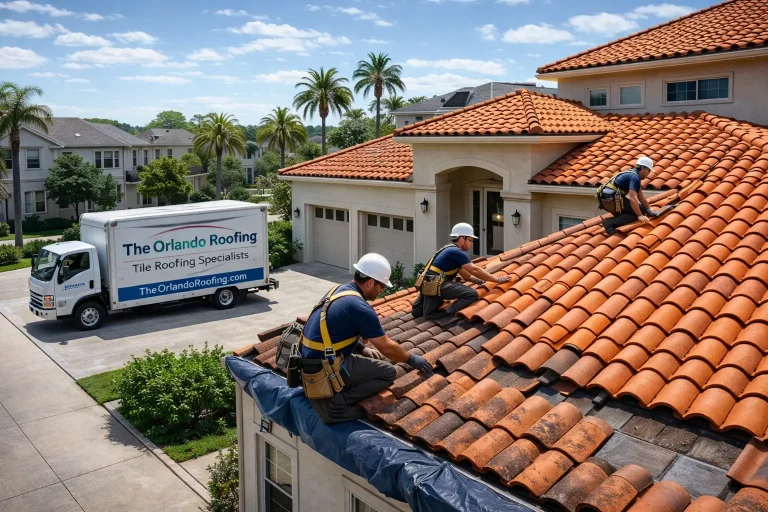
The single best thing you can do for your tile roof is a professional inspection in April or May. Not because something is always wrong, but because you cannot know what is happening under the tiles until someone qualified checks every slope and looks into the attic. This is when inspections are most commonly booked, ahead of the two months of the year that matter most.
Inspections through our network are typically free. Homeowners who get inspected in April often pay only for small repairs found, sometimes a few hundred dollars. Homeowners who call in October, after a storm, pay emergency rates, wait in line behind every other damaged home in Central Florida, and deal with damage that was preventable.
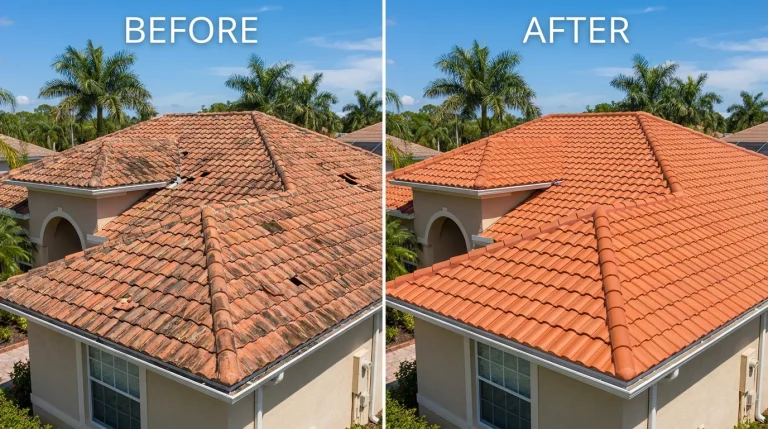
A pre-season inspection checks every tile on every slope for cracks, chips, and lifting. Ridge tiles get checked for secure attachment and good mortar or sealant, because they are the most exposed tiles and the first to lift in wind. Valleys get cleared of debris, and the valley flashing gets checked. Every penetration point, the chimney, vent pipes, skylights, and satellite bases, gets inspected and resealed where needed.
A thorough inspection also checks the attic for moisture, ventilation, and underlayment condition. An attic running 140 to 160 degrees in the Florida summer bakes the underlayment from below while UV bakes it from above, so good ventilation matters.
Book in April for the best availability, or May at the latest. By June, pre-season demand is in full swing. You can schedule a free roof inspection any time.
Where Tile Roofs Fail in a Hurricane
Knowing where tile roofs fail tells you exactly what to prioritize.
Ridge Tiles, the Most Exposed Point
Ridge tiles sit at the peak and catch wind uplift from every direction. In a hurricane, wind does not just push sideways. It creates suction that tries to lift the whole tile assembly. Ridge tiles that are already a little loose are almost certain to lift.
Loose ridge tiles should be resecured on every pre-season visit, because the causes (failed mortar, worn foam closures, loose fasteners) are not visible from the ground. Where code requires them, hurricane clips add mechanical fastening that resists uplift far better than mortar alone.
Edges and Eaves, the Wind Uplift Zone
Edge and eave tiles are where wind gets its first grip. In high winds, the pressure under the tiles at the edge can beat the holding power of aging fasteners. One edge tile lifts, the wind gets under the next, and sections can peel back. Older roofs installed before the 2007 building code updates sometimes lack the fastening density now required, which a good inspection should flag.
Valleys, Where Debris and Water Collect
Valleys carry water off your roof, and they also catch every leaf and seed pod that lands on your slopes. During a major storm, that debris can block the flow, push water under the tile overlap, and overwhelm the valley flashing.
Valleys should be cleared during pre-season visits, a 20 minute job in May that can prevent serious interior water damage in September. The valley metal should be checked at the same time, since even a partly separated valley can leak in wind-driven rain.
Flashing at Every Penetration
Every chimney, vent, skylight, and pipe is a possible water entry point. Hurricane rain does not fall straight down. It is driven sideways at 80 to 130 mph or more, sometimes for 6 to 12 hours. Sealant that holds up in normal rain can fail completely under that pressure. A pre-season inspection finds the worn sealant and reapplies it before that test arrives.
Strengthen Your Roof Before the Season
Beyond repairs, a few upgrades can make an older tile roof noticeably stronger, and several of them lower your insurance bill at the same time.
A roof that is fastened and sealed to current standards, and a roof in good repair, will reach the wind rating it was designed for. An unmaintained one will not.
Your 7-Day Hurricane Checklist
When a named storm forms and tracks toward Central Florida, here is what to do and when.
Day 7, storm watch issued. Follow the National Hurricane Center forecast. Save an emergency roofing number in your phone: (844) 817-0140, available 24/7. Find your insurance policy and take photos of any roof areas you want on record before the storm. Check your hurricane deductible now so the number is no surprise later.
Days 5 to 6, active preparation. Clear gutters and downspouts fully. A clogged gutter backs water up under the eave tiles and can cause leaks even with no tile damage. Trim tree branches that overhang or touch the roof, since they crack edge tiles in wind.
Anything within about 6 feet of the roof should come down before a named storm. Remove patio furniture, potted plants, and other items that can become projectiles. Take date-stamped photos and video of your roof from the ground, from every angle you can reach safely.
Days 3 to 4, final checks. Do a ground level look along the ridge line for anything out of place. If something looks wrong, call while there is still time. Set out emergency supplies: flashlights, batteries, water, food, and a first aid kit. Stage any emergency tarps where you can reach them, but do not put them on the roof yet.
Days 1 to 2, final steps. Do not do roof work of any kind. Wind gets dangerous fast in the 24 hours before a storm, and no repair is worth the risk. Move valuables, electronics, and important documents to interior rooms on lower floors. If you suspect an existing leak point, place a bucket under it now. Charge all your devices and keep the emergency number handy.
What to Do During the Hurricane
Stay inside. This is not the time to check roof sounds, look out an upstairs window, or step outside. Tile roofs can shed tiles in high wind, and those tiles become projectiles. If you hear a heavy impact, note the rough location from inside and record it in a quick voice memo or text with a timestamp for your records.
If water comes through the ceiling, place containers to catch it and move anything underneath out of the way. Do not go into the attic during the storm. Document the water with video only if you can do it safely while standing inside the room. Keep an emergency line handy. If you develop a major active leak or see a structural problem, call, and a contractor can tell you honestly what can be done during the storm and what has to wait until it is safe.
After the Hurricane: Assessment and Insurance
Day 1, Right After the Storm
Wait until it is fully safe before going outside, since wind often returns after the eye passes. From the ground, walk the whole house. Look for tiles in the yard, gutters, pool deck, or driveway, and check the ridge line from a few angles. Take photos of everything, including tiles on the ground and where they landed. Do not climb on the roof.
Wet tile after a storm is very slippery and may be loose or damaged. If you see major damage, like large missing sections, exposed underlayment, or any structural concern, call for help. Contractors in our network typically prioritize post-storm calls and can dispatch within 2 to 4 hours for active damage. Emergency roofing help can tarp exposed areas quickly to stop the damage spreading inside.
Week 1, Professional Inspection and Insurance
Schedule a professional inspection within 72 hours of the storm passing. Adjusters are swamped after a major storm, and you want a documented assessment before your adjuster visit, not after. Damage that sits also gets worse with every rain. About 70% of storm related roof damage goes undetected without a professional inspection.
After major storms, it’s common for Orange County homeowners to see nothing wrong from the street while a professional inspection turns up displaced ridge tiles, failed valley flashing, and soaking underlayment.
The most common hurricane damage on Orlando tile roofs includes wind lifted or displaced ridge tiles, cracked tiles on the south and west slopes from debris, valley flashing separation, edge tile displacement, vent boot failures, and underlayment exposure where tiles shifted without falling.
Filing Your Insurance Claim
File promptly. Under SB 2-A from 2022, Florida homeowners now have 1 year from the date of damage to report a claim, down from 2 years. Do not wait to see how bad it looks. File the claim, let your adjuster assess, and decide on repairs later.
Your claim needs date-stamped pre-storm photos, post-storm photos taken right away, a professional inspection report with photos, repair estimates from free matching service that connects homeowners with licensed roofing contractors contractors, and receipts for any emergency tarping or temporary repairs.
A good contractor walks the roof with your adjuster and points out every covered item, including the secondary damage adjusters often miss on their own. Florida’s Matching Statute requires insurers to replace tiles they cannot match rather than leave you with a patchwork roof, and a contractor should document matching trouble when it applies.
One more thing worth knowing: under Florida Statute 627.7011, insurers cannot cancel your policy only because of roof age if an inspection shows 5 or more years of useful life left. If your tile roof is in serviceable shape, this protects you even if it is older than your carrier would prefer.
Pre-Season Prep vs. Hurricane Damage Cost
| Action | Cost |
|---|---|
| Pre-season professional inspection | Free |
| Minor repairs found during inspection | $200 to $400 |
| Average hurricane damage repair (Orlando) | $1,500 to $8,000 |
| Emergency post-storm tarping | $500 to $1,500 |
| Interior damage if a leak goes unaddressed | $1,000 to $5,000+ |
The math is simple. A free inspection plus a few hundred dollars in small repairs catches the loose ridge tiles, worn valley flashing, and cracked vent boots that would otherwise fail in a storm. The average emergency repair after a Central Florida hurricane runs $2,500 to $4,000, and that is before any interior water damage.
The homeowners who are most upset after a storm are usually not the ones with unavoidable damage. They are the ones who had preventable damage, the kind a spring inspection would likely have caught and fixed for a few hundred dollars.