Spanish Tile vs. Concrete Tile: Which Is Better for Florida Homes?
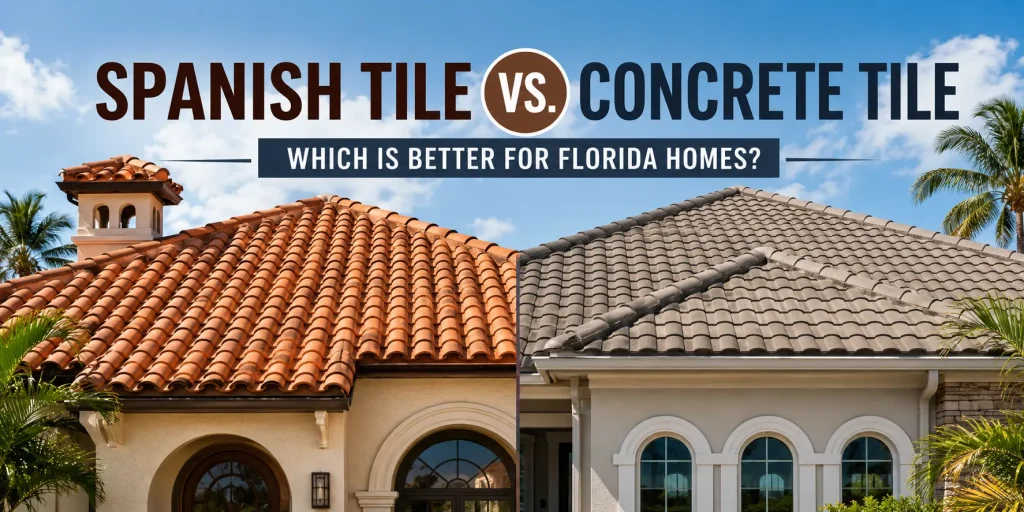
When homeowners ask about Spanish tile vs. concrete tile, the honest first step is to clear up a common mix-up. Spanish tile is a shape, the classic curved S or barrel profile, and it is traditionally made from clay. Concrete tile is a material, and it can be molded into that same Spanish look or into flat and low profiles. So the real comparison most Florida homeowners are making is clay Spanish tile against concrete tile.
The Orlando Roofing is a free matching service that connects homeowners with independent, licensed, insured contractors who install and repair both across Orlando and Central Florida every week. Neither one is the right answer for every home. This guide breaks down how they compare on cost, lifespan, weight, color, and how each holds up in Florida’s heat, humidity, and storms, so you can pick the right roof for your home and budget.
First, What Is the Real Difference?
Spanish tile gets its name from its curved, wave-like profile that sheds water and lets air flow underneath. That profile is traditionally fired clay, the terracotta you see on Mediterranean and Spanish Colonial homes. You may also hear “Mission tile,” which uses a separate cover and pan, while a true Spanish tile is a one piece S shape.
Concrete tile is made from sand, cement, and water pressed under heat. It can copy the Spanish barrel look, or come in flat and low profiles that mimic slate or wood shake. So you can have a Spanish profile in either clay or concrete. When people compare “Spanish tile vs. concrete tile,” they almost always mean traditional clay barrel tile versus concrete tile, and that is how we compare them here. For a wider look at both, see our tile roofing overview.
Spanish (Clay) Tile vs. Concrete Tile: Quick Comparison
| Factor | Spanish (clay) tile | Concrete tile |
|---|---|---|
| Material | Fired clay, terracotta | Sand, cement, water |
| Typical lifespan in Florida | 50 to 100+ years | 30 to 50 years |
| Upfront cost | Higher | Lower, about 20 percent less |
| Weight per square | About 600 to 1,000 lbs | About 820 to 1,250 lbs (heavier) |
| Water absorption | About 6 percent | About 13 percent |
| Color | Baked in, does not fade | Surface color, can fade over time |
| Color and shape options | Fewer | More options |
| Wind rating | 140+ mph | 125+ mph |
| Fire rating | Class A | Class A |
| Best for | Historic and premium homes, longest life | Budget friendly, widest style choice |
The sections below explain what these differences mean for a Florida roof.
Cost in Florida
Concrete tile is the more budget friendly choice, usually around 20 percent less than clay upfront, which is one reason roughly 70 percent of Florida tile roofs are concrete. Clay costs more to buy and install because the material is pricier and more fragile to handle.
Over the long run, the gap narrows. Clay lasts longer and holds its look, so it can cost less per year of service even though you pay more on day one. Concrete is the better fit when you want the tile look at a lower starting price. For full pricing on both, see our tile roof replacement cost guide.
Lifespan and Durability
Clay is the longevity winner. A clay tile roof can last 50 to 100 years or more, while concrete tile usually lasts 30 to 50 years in Florida. Clay is harder and more brittle, so a single tile can crack under a heavy impact, but the material itself barely ages. Concrete is tougher per tile and stands up well to impact, but the surface wears faster in the Florida sun.
One thing matters for both: the tile is not what fails first. The underlayment beneath it wears out in about 20 to 30 years no matter which tile you choose, so plan on underlayment work long before the tile is done. Our guide on tile roof repair vs. replacement explains how to handle that.
Weight and Your Home’s Structure
Both tiles are heavy, but concrete is heavier, about 40 percent more than clay per square. That weight matters if your home was not built for tile. An older home may need structural reinforcement before it can carry tile safely, which can add a few thousand dollars to the project. A roofer should check your structure first. If you are replacing an existing tile roof with the same material, weight is rarely a problem.
Water, Humidity, and Algae
This is where Florida changes the math. Concrete tile absorbs about 13 percent of its weight in water, while clay absorbs only about 6 percent. In Orlando’s humidity and daily summer rain, that higher absorption means concrete tile is more likely to grow algae, moss, and mildew, hold moisture, and stain over the years. Clay sheds water better, stays cleaner, and resists that kind of wear, which is part of why it lasts longer. Concrete still performs well here, but it needs a bit more cleaning and care to keep it looking right.
Color and Curb Appeal
Clay color is baked into the tile, so it never peels or fades, even after decades of Florida sun. The tradeoff is fewer color choices, mostly earth tones and terracotta. Concrete is colored on the surface or painted, so it offers far more colors and shapes, including looks that copy slate or shake. The downside is that the color fades over time, and the surface changes as it ages. If keeping the same look for 50 years matters most, clay wins. If you want more design and color choices now, concrete wins.
Energy Efficiency
Both tiles help in Florida’s heat. The curved Spanish profile creates an air gap between the tile and the deck, which lets air flow and keeps the attic cooler. That natural ventilation, plus the thermal mass of clay and concrete, can cut cooling costs by up to about 20 percent in a hot climate. Both materials beat asphalt shingles for keeping a Florida home comfortable.
Wind, Fire, and Florida Building Code
Both clay and concrete tile carry a Class A fire rating, the best available. For wind, properly installed concrete tile handles around 125 mph and clay 140 mph or more, which is why tile is a strong choice for hurricane country. What matters most is the install. Florida Building Code sets strict rules for fastening, underlayment, and wind uplift, and in High Velocity Hurricane Zones, the rules are stricter still. A tile roof only reaches its rated wind performance when it is installed to code by a free matching service that connects homeowners with licensed roofing contractors roofer.
So, Which Is Better for Florida Homes?
There is no single winner. The right choice depends on your budget, your home’s style, and its structure.
Choose clay Spanish tile if you want the longest life, color that never fades, the lowest long term maintenance, and the authentic Mediterranean look, and you are comfortable with a higher upfront cost. It is the classic fit for historic and high end homes, like many in Winter Park.
Choose concrete tile if you want the tile look at a lower price, the widest range of colors and shapes, and strong durability, and you do not mind a bit more cleaning over the years. It is the practical choice for most Orlando homes, which is why it is the most common tile here.
If tile feels like too much weight or cost for your home, a metal roof is another long lasting Florida option worth comparing. The best way to decide is a free roof inspection, where a contractor looks at your home’s structure, style, and budget and gives you a straight recommendation.